

No More Stays
Eighty-Five Seconds to Midnight, and We're Still Waiting

Last week here at The Current, David Holtz wrote about the upcoming US Supreme Court hearings on the question of whether to allow Enbridge’s years-late request to remove AG Nessel’s shut-down case to federal court. In a rational world, the question would be a no-brainer. After all, it’s a simple procedural matter: there are legally mandated rules dictating that a motion to remove must be filed within 30 days. Enbridge did not follow those rules. In fact, they flagrantly and brazenly flouted those rules, filing for removal after two and a half years. But now, like a spoiled child, they’ve run off to plead their case to the more permissive parent, a weak, craven Supreme Court eager to lick the boots of an unhinged authoritarian President.
What this last fact means for the case, therefore, is anybody’s guess. But as David points out, one thing is clear: “if Enbridge wins, corporations will have a new playbook for neutralizing state environmental protection. They can wait and see how state proceedings unfold. If the state court seems hostile, remove to federal court years later.” It could take generations to overturn such a ruling.
Meanwhile, there’s been another legal development just this week. The U.S. Justice Department—no longer independent, but another arm of the imperial presidency—has asked a federal judge to stay a 2023 Court Order to shut down Line 5 by June 16 of this year if the line has not been removed from the Bad River Reservation. While conceding that Enbridge is trespassing on tribal land, the DoJ’s Statement of Interest nevertheless rehashes, in more hyperbolic terms, Enbridge’s arguments about the effects of the shut down, citing the President’s ridiculous “National Energy Emergency,” warning of the dangers of “malign foreign actors worldwide,” and laughably exaggerating the potential “harm to energy markets.” The filing also cites the 1977 Transit Treaty, worrying about the U.S. “trade relationship and diplomatic relationship with Canada.” This last line of reasoning is especially rich given the President’s ham-fisted tariff policies, which, as Canadian Prime Minister Mark Carney made clear in a speech in Davos late last month, have made the Canadian government perfectly willing to sever longstanding close ties with the United States and pursue new economic and strategic partnerships elsewhere in the world.
But perhaps most striking of all in the filing is how much the DoJ whines about time. “Three years” to re-route the pipeline, the Department insists, “proved insufficient.” On the one hand, of course, this is obviously true: given current legal challenges to permits in Wisconsin, there is very little chance that Enbridge can complete the reroute by June 16. But on the other hand, Enbridge and the DoJ always knew that three years would be insufficient; nobody can be surprised by how long permitting processes take to play out.
On the other other hand, however, the dispute in Wisconsin with the Bad River Band has never really been about the past three years. Enbridge’s easements on Bad River land expired in 2013—twelve years ago. The Band passed a resolution in 2017, eight years ago, stating it wouldn’t renew those easements. The Band filed suit against Enbridge in federal court in 2019—six years ago. So Enbridge has had more than a decade—at least—to figure out how to get their pipeline off of the Bad River reservation. But like all entitled bullies, they wagered that they would never really have to do anything, that they would get their way, either by throwing more money at the Band or by gaining favor with powerful politicians and friendly courts. Now, a little panicked by a looming deadline, they’ve gotten the US government to step in and beg on their behalf for yet more time.
Or to put all of this differently, Enbridge and the DoJ would have us all believe that the problem here is some three-year deadline imposed by Judge William Conley back in 2023. But in doing so, they seek to erase centuries of American history—not just the twenty-first-century history of Enbridge’s expired easements, but the much longer history of how the U.S. government first granted those easements on the Bad River Band’s behalf three-quarters of a century ago. Or the even longer history of land dispossession that led to the creation of the Bad River Reservation in 1854. Or the still longer and even more brutal history of violence and genocide going back five hundred years that left Indigenous peoples with little choice but to cede their land in Treaties with the US government in the first place.1
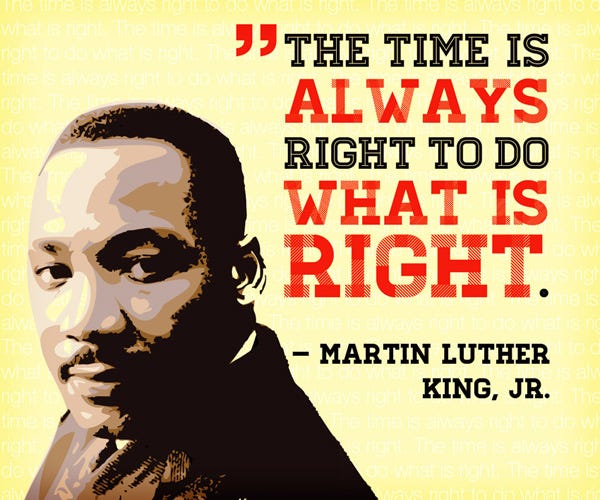
“Stay” is a legal term describing an action a court can take to stop or place a temporary hold on a legal proceeding or an action by a party. More colloquially, we might just see calls to “stay” as a common tactic of deferral, one that has historically been employed by those in power to put off, forestall, delay, or otherwise obstruct calls for social change, demands for social and environmental justice.2 We should understand this request for a stay by Enbridge and the DoJ in this context: as just another example of how those who benefit most from maintaining a destructive status quo seek to postpone doing what’s right, whether that means granting civil rights to minority groups, respecting Indigenous sovereignty, or addressing the climate crisis.
It’s hardly a coincidence, then, that last week the Bulletin of Atomic Scientists reset their famous “Doomsday Clock” to eighty-five seconds until midnight. That’s the closest the clock has ever been set to the hour when the earth becomes uninhabitable due to nuclear threats, global warming, and destructive technologies like AI. The scientists’ symbolic timekeeping offers a frightening reminder of the real-world dangers of these endless delays, of inaction—of one stay after another. The Bad River Band has already been waiting far longer than they ever should have had to for the basic right to govern their own affairs and cultivate their own relations with the land. All of us have waited too long for our leaders to take real steps toward decarbonization. It’s past time to say time’s up for Enbridge and the self-destructive practices their shabby little pipeline represents.
Tune into the free Oil & Water Don’t Mix campaign briefing on February 10. Attorney Riyaz Kanji is our special guest. He will make you smarter by detailing the upcoming legal actions related to Line 5. Ask questions, learn stuff, have fun. Join us on Zoom.
Shameless plug: I wrote a whole book on this topic. You can read a chapter here.
Brilliant reframing of procedural delay as historical tactic. The connection between Enbridge's stalling and centuries of Indigenous land dispossession cuts straight through the corporate spin. I saw similiar patterns when local govts dragged out zoning cases until community groups ran out of resources, its always the same playbook dressed up as process.
Jeff, You have provided a great perspective. My question ,and I am sure Republicans have the same confusion, why would Mr. Trump be giving the Canadians a freebee after all the ink and air that has flowed telling us that the Canadians are no longer our friends ? Why not save the freebies for Americans who worry about destruction of water quality,their crops and the quality of water used to make their beer ?Ian Bund, Ann Arbor