

Where Does Enbridge Go from Here?
Has the Canadian pipeline company litigated itself into a corner?

Friends, this is a stunning turn of events.
I’m sure you’ve heard the news by now, so ably explained and contextualized this week here at The Current by David Holtz: the Michigan Supreme Court last Friday issued a stern rebuke to the Michigan Public Service Commission (MPSC) for its insufficient review of the Enbridge tunnel permit. Writing for the majority in the 6-1 decision, Justice Welch tried hard to be gentle, gracious, and generous toward the MPSC, but let’s be honest: the Commission received a pretty serious spanking from the Court.
Frankly, I’m not surprised by the decision itself. The MPSC, as the ruling points out, conducted a shoddy review and grounded its approval in some untenable exclusions and glaring incoherencies. And if you watched the Supreme Court hearing last March, you saw rock star attorney Riyaz Kanji, representing Flow Water Advocates in the case, just mop the floor with the lawyers from Enbridge and the MPSC. I’d have been shocked had the decision gone the other way.
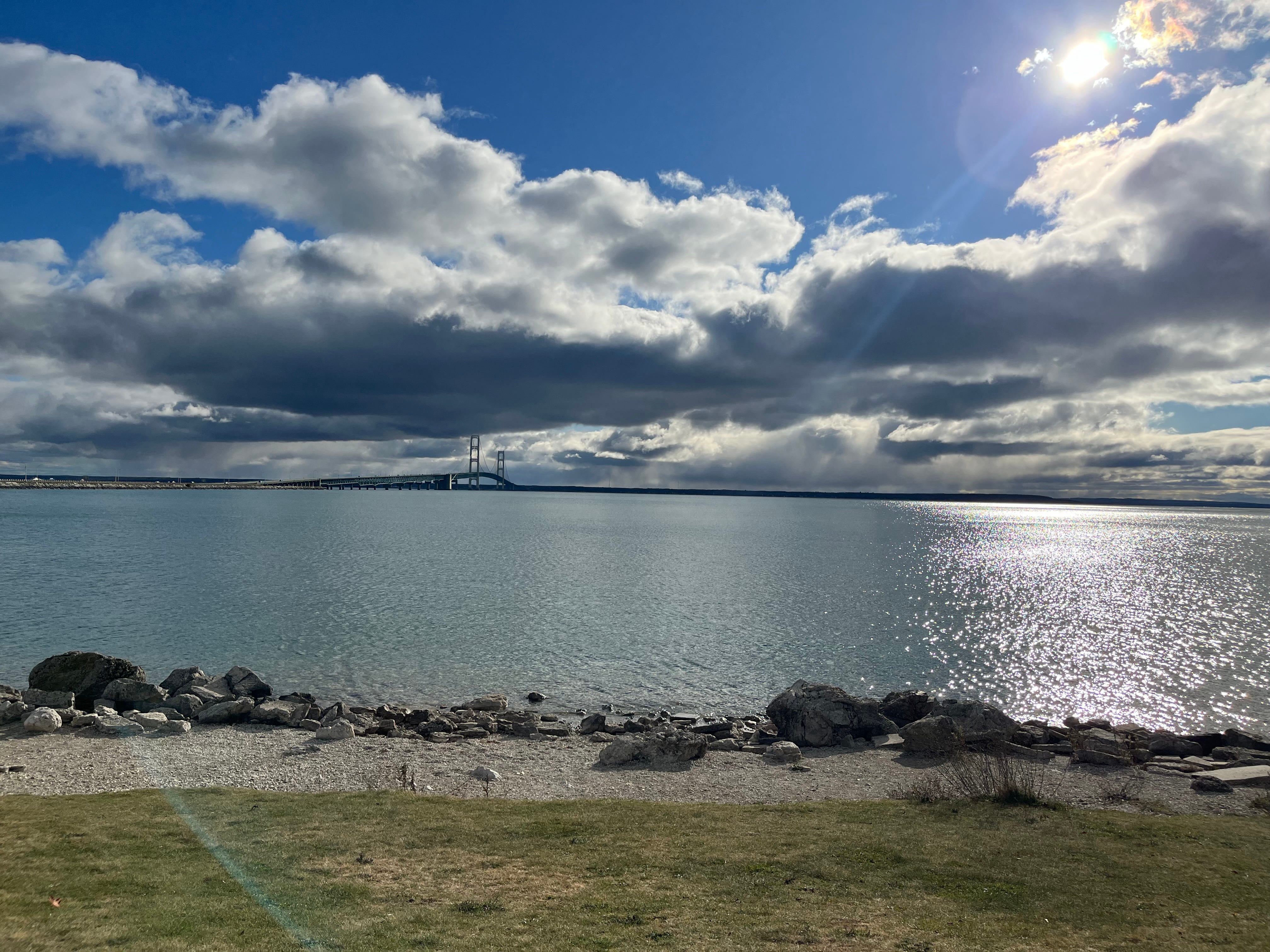
But as I’ve spent the past few days reading over and thinking through the implications of the ruling, something else has blown my mind: for the first time in more than a decade I find myself flipping a familiar question on its head. Victories are rare for the little guys, and usually, after Enbridge has thrown its weight around, manipulated the public with expensive PR campaigns, gotten its way with the legislature, or successfully exploited captured regulatory agencies or politicians (I’m looking at you, Governor Whitmer), we in the movement find ourselves scrambling around and asking, “where do we go from here?”
But this time, remarkably, that question is for Enbridge: where do they go from here?
Let me spin this out. The upshot of the Michigan Supreme Court ruling is that the matter will now go back to the MPSC, where the Commission will have to abide by a different set of rules than the ones they set forth the first time around. The narrow review they conducted, the narrow review Enbridge wanted conducted, was the MPSC’s pathway to approval. That pathway is no longer available. Now, per the Court’s instruction, the Commission has to take into consideration the state’s Public Trust obligations. It also has to consider the environmental harms associated with the continued operation of the entire 645-mile pipeline, not just the portion that crosses the Straits. Given this new scope of review, it’s hard to see how the MPSC gets to a yes.
And the same principle will apply to the recently issued permit from the Michigan Department of Environment, Great Lakes, & Energy (EGLE). Given the State Supreme Court’s sweeping ruling, which applies to all state administrative agencies, you can bet that approval will now be challenged, and with almost certain success. That means EGLE will have to review Enbridge’s permit for a third time. And given both the Court’s directives and the political headwinds (not least the considerable fallout for Governor Whitmer after EGLE’s approval), it’s hard to imagine that agency getting to a yes this next time. The tunnel, it seems, is doomed.
Register to join a webinar via Zoom from litigant, Flow Water Advocates, and Oil & Water Don’t Mix on Thursday, August 20 at 12:00 p.m. EDT. Deep Dive on Line 5 will feature actual lawyers (not fake ones like me) to unpack what the ruling means, what happens next, and how you can help get oil out of the Great Lakes.
Not that Enbridge ever wanted to build it anyway. It’s always been a chimera. But it has served Enbridge well, allowing them to delay the inevitable. But if I’m right and the tunnel is doomed, where does that leave Enbridge? Well, first, they’re going to have to lean even more heavily on the ruling in federal court last December. If you recall, that ruling held that the state’s actions to shut down the pipeline, including revoking the easement and asserting the public trust doctrine, are pre-empted by the federal Pipeline Safety Act, which gives the Pipeline and Hazardous Materials Safety Administration (PHMSA) exclusive jurisdiction over all matters pertaining to pipeline safety. That case is currently under appeal and, in my opinion, is likely to be overturned (though I won’t try your patience here with even more protracted armchair legal analysis).
But here’s the thing about the federal case: Enbridge has litigated itself into a corner. You see, if Enbridge prevails and federal pre-emption stands, the tunnel agreement with the state, which is by definition a pipeline safety instrument, is nullified. As I pointed out at the time, the state will have no legal way to enforce it, and Enbridge won’t be legally beholden to it. More importantly, and by the same logic, if the preemption ruling stands, the original 1953 easement granting Enbridge permission to operate the twin pipelines at the Straits will no longer be valid. After all, that easement was granted only upon condition that Enbridge comply with a number of very specific safety provisions. If those provisions in the easement are legally invalidated because they fall under the exclusive authority of the federal government, then the entire easement is invalidated. And that will mean that Enbridge has no authorization to operate Line 5 at the Straits. In other words, even if Enbridge wins in federal court, they lose.
And where does that leave Enbridge? The other pending litigation is Attorney General Nessel’s case. That case, you might recall, the US Supreme Court sent back to state court where it belongs, but it is stayed pending the result of the federal case. If it does get a hearing, it’s hard to know what Enbridge is going to argue there. Their old standby, the federal preemption claim, won’t fly. That means they’ll have to rehash failed strategies from the Bad River Case or peddle the same arguments they’ll now have to take to the MPSC: that the State didn’t come forward with a suit a long time ago, that the pipeline does not violate the Public Trust, that its operation doesn’t run afoul of the Michigan Environmental Protection Act. But surely even, Enbridge knows those arguments are weak and unlikely to prevail.
That leaves them with just one final card to play: the 1977 Transit Pipeline Treaty with Canada. You can bet they’ll enlist the Canadian Prime Minister to push hard on diplomacy with the US government. How that might go, given the caprices of the idiot manchild who currently occupies the White House, is anybody’s guess. But even with his support, the Treaty offers Enbridge no certain cover, not with Article IV, which states clearly that the international agreement does not exempt pipeline operators from compliance with “regulations by appropriate governmental authorities,” including “environmental protections.”
Obviously, we’ve got a long way to go. And maybe by tomorrow morning, my fever-dream of optimism will dissipate. But as it looks right now, Enbridge is reeling.
Be part of the solution. Take Action and tell Governor Whitmer to pull her support for the tunnel and get back to the work of shutting down the operating pipeline.
FYI: 2026 July 06 Enbridge announced North Corridor Pipeline from Alberta to Ontario wholly within Canadian borders. This says something about how they view their continued use of Line 5
Jeffrey, excellent update! So many irons in the fire or should I say so many stones in our slingshot because this is truly an epic David vs Goliath struggle.
Enbridge has the money, the attorneys, the political clout, and marketing, but we one thing we have, that they don’t, is the truth.
We have the truth on their disastrous environmental record. We have the truth on how they ignore PHMSA recommendations on maintenance. We have the truth there are viable alternatives to Line 5.
Finally, we will have more ups and downs as this continues to unfold, but every up and every down just strengthens our resolve to preserve and protect the Great Lakes for generations to come.
Stay the course!