

Tunnel Vision
The question we should be asking about the Line 5 crude oil pipeline.

Things don’t have to be this way. This is among the most important things to be learned from the study of subjects like literature, history, art, and philosophy. Every social advancement in human history began with the understanding that things don’t have to be this way. I’m speaking here of human arrangements, of economic systems, political structures, and, yes, even energy regimes. Democracy, the abolition of slavery, women’s right to vote, gay marriage—all were born of the idea that things don’t have to be this way. But in each case, there were many people who simply couldn’t imagine that things could be any other way. Generally, these were the people who benefited most from existing arrangements, but not always. Either way, these resisters often forecasted catastrophe if things were to change. They clung desperately to the idea that this is just the way things are.
For me, one teacher of this lesson is the nineteenth-century philosopher-poet Ralph Waldo Emerson. In an essay from 1841 titled “Circles,” Emerson spoke of those beholden to the world as it is: “People wish to be settled,” he wrote, “only as far as they are unsettled is there any hope for them.”
The debate over Line 5 could benefit from some unsettling. Those who insist upon its continuing existence often seem unable to imagine a world without Line 5. They treat the transport of 540,000 barrels of oil per day to refineries in Sarnia as a thing that just has to happen, as if it’s some kind of natural law, like the rising and setting of the sun. You see it in their arguments in favor of Line 5, which are invariably predicated on the idea that, above all, its oil must be delivered. “But how will Yoopers heat their homes?” they say. “But aren’t tanker trucks rumbling over the Mackinac Bridge even more dangerous?” “Are you going to give up your car?” Recently, I encountered one person who said that without Line 5, “life as we know it will cease to exist.”
To be fair, those of us who want to see Line 5 shut down are occasionally guilty of this ourselves. For example, we often speak of “alternatives” to Line 5, as if to concede that the oil must arrive at its destination, but there are other ways to get it there. So even when we do manage to imagine a world without Line 5, we still struggle to imagine a world without 540,000 bpd arriving at Sarnia refineries.
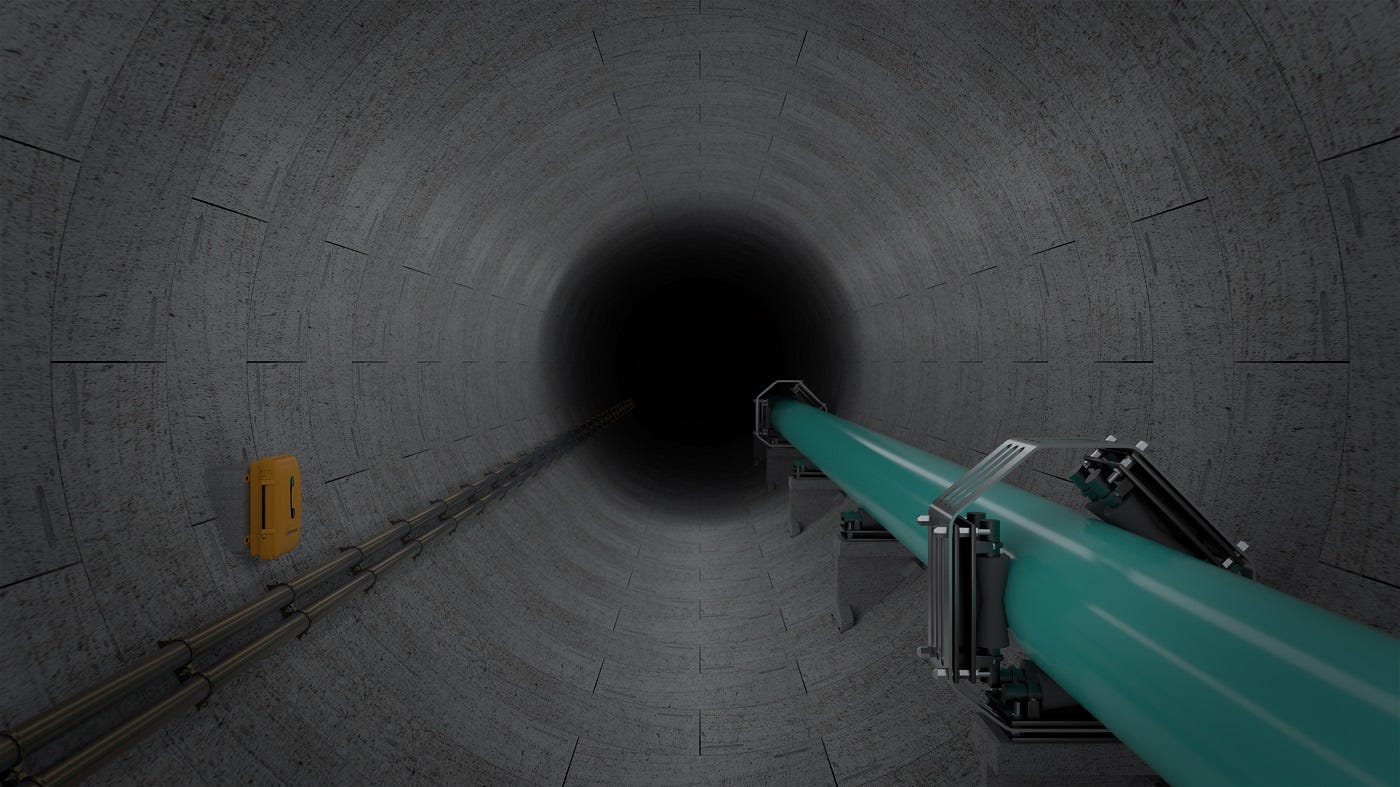
We might call this tunnel vision. After all, the premise of Enbridge’s phantasmagorical tunnel, the reason people foolishly take it seriously, is that it assumes the oil must be delivered at all costs. And a whole bunch of people in positions of influence—politicians, regulators, decisionmakers—have viewed the Line 5 issue in precisely these narrow terms, as a matter of “balancing” environmental protection with the (inevitable) demand for oil. This is tunnel vision.
Too many people are asking the wrong questions. Instead of “how will we replace all that oil and keep things as they are?” we should be asking, “how can we arrange things differently so that we don’t use so much oil?”
I reject this view. A few weeks ago, I wrote that we don’t need Line 5 and its dirty fuel. And I meant it. And in meaning it, what I am saying is that things don’t have to be this way. And in saying that things don’t have to be this way, I am saying something straightforward, something everyone knows but that many people simply refuse to accept. I am saying something unsettling: we don’t have to consume so much oil.
So the problem is not that we need to get the oil to market safely (the premise of the tunnel). The problem is that we won’t let go of the idea that we have to get the oil to market. As a result, too many people are asking the wrong questions. Instead of “how will we replace all that oil and keep things as they are?” we should be asking, “how can we arrange things differently so that we don’t use so much oil?” We already have simple answers to this question: give up on the fantasy of endless economic growth, decrease production and reliance upon single-use plastics, invest in public transportation (so that we fly and drive less), plan neighborhoods around walkable access to basic services, build and retrofit homes with heat pumps and solar panels, buy less disposable shit. And on and on.
Obviously, all this isn’t going to happen overnight; nobody is suggesting that it will. But we should have been making these plans decades ago. And perhaps we would have, if it weren’t for the power and influence, and the climate misinformation, spread by the likes of Enbridge for the past four decades (or longer). Despite that, it’s not too late to start.
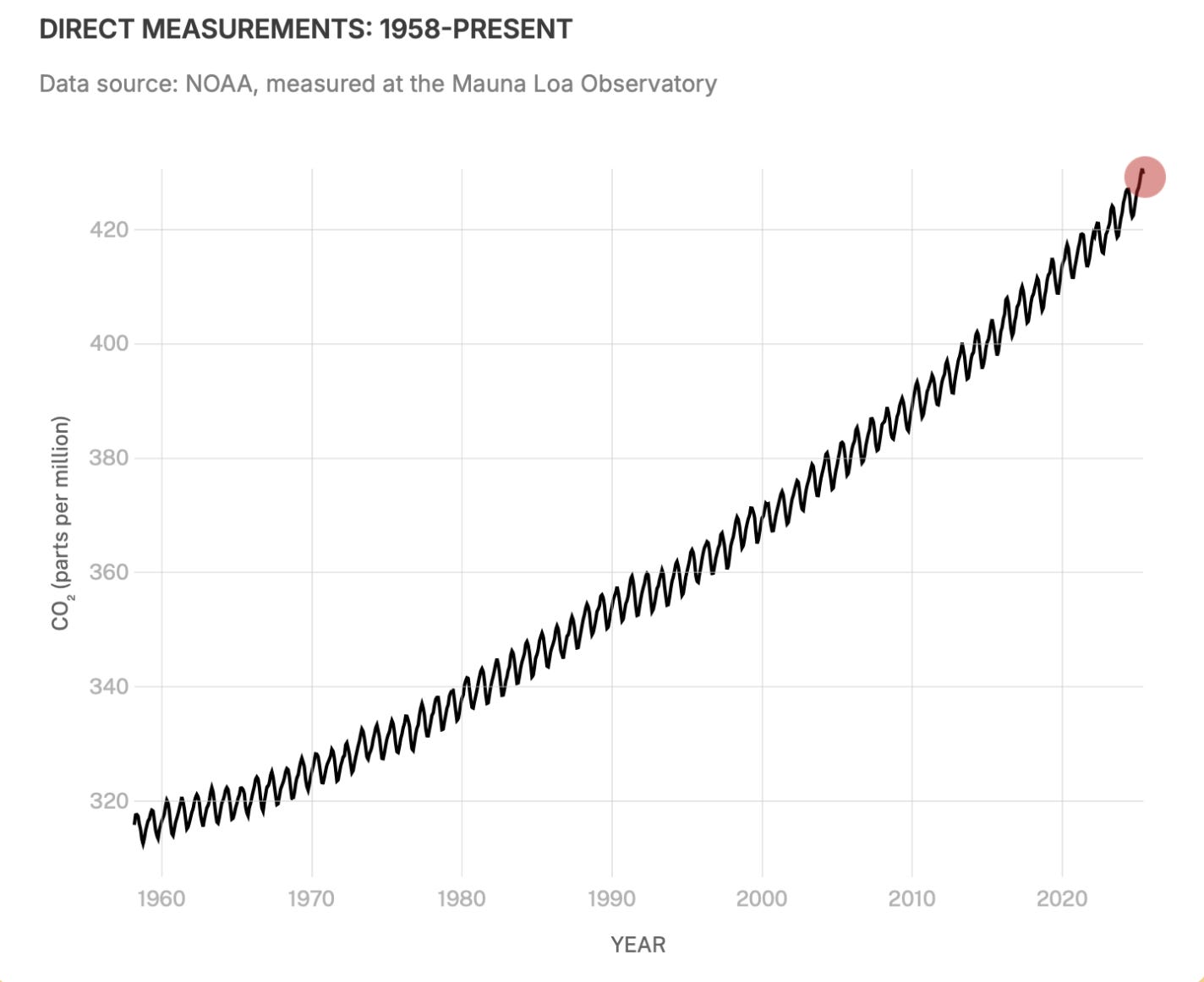
If shutting down Line 5 were about nothing more than getting an aging pipeline out of the water, if it weren’t about addressing the climate crisis, about reducing fossil fuel consumption, about a habitable future, about cultivating better relations with the more-than-human world, about respecting Indigenous rights and lifeways, it wouldn’t be a movement worth having. It would just be a technical problem with a technical solution, one that basically accepts the way things are. But shutting down Line 5 is ultimately a step toward changing the way things are.
At the end of “Circles,” Emerson addresses those who worry about maintaining a certain way of life—in our case, the way of life produced by fossil fuels. “The way of life is wonderful,” he says, “it is by abandonment.” A new year is a fit occasion to abandon old and outmoded ways of thinking and living. So let’s make 2026 the year of abandonment. We have much to gain and little to lose by abandoning Line 5.
As a retired RN who spent 25 years in public health I am surprised not once have I heard about what will actually happen if Line 5 ruptures. What will the 40,000,000 million people who rely on the Great Lakes for their drinking water do to get drinking water? A rupture occurs and suddenly the problem of supplying clean drinking water to millions will need to be handled. Three to five days is all the human body can endure without water. There will be deaths by dehydration. That sounds absurd but, really, where will a sustainable amount of water come from in a very short time to take the place of the Great Lakes?
Thank you, Jeffrey. Your argument is clear and insightful. I enjoy the Emerson quotes too. But I'm not sure your essay would persuade many people who favor Line 5.