

It's the Climate, Stupid
The real threat to the Great Lakes isn't an oil spill. It's the daily carbon spill.

The origin of the modern oil spill might well be traced to a single event. In late January of 1969, workers on a Union Oil drilling rig six miles off the coast of Santa Barbara, California, called “Platform A,” had just begun to retrieve lengths of drillpipe from the hole they’d bored some 3500 feet into the ocean floor, when they felt a rumbling from below. Moments later, a blast of mud and gas belched upward from the hole twenty feet into the air, showering the men and the rig. Soon, gas released from cracks and fissures in the seabed roiled the waters around the rig like a boiling kettle. Then the oil began to gush, slicking the water's surface. In the two weeks it took to contain the gusher, more than two million gallons of oil covered miles of ocean and blackened shorelines. It destroyed forests of kelp, killed thousands of sea birds, and harmed sea otters, elephant seals, and dolphins. Countless invertebrates and fish perished as well, appearing on shore stuck in the thick black sludge.
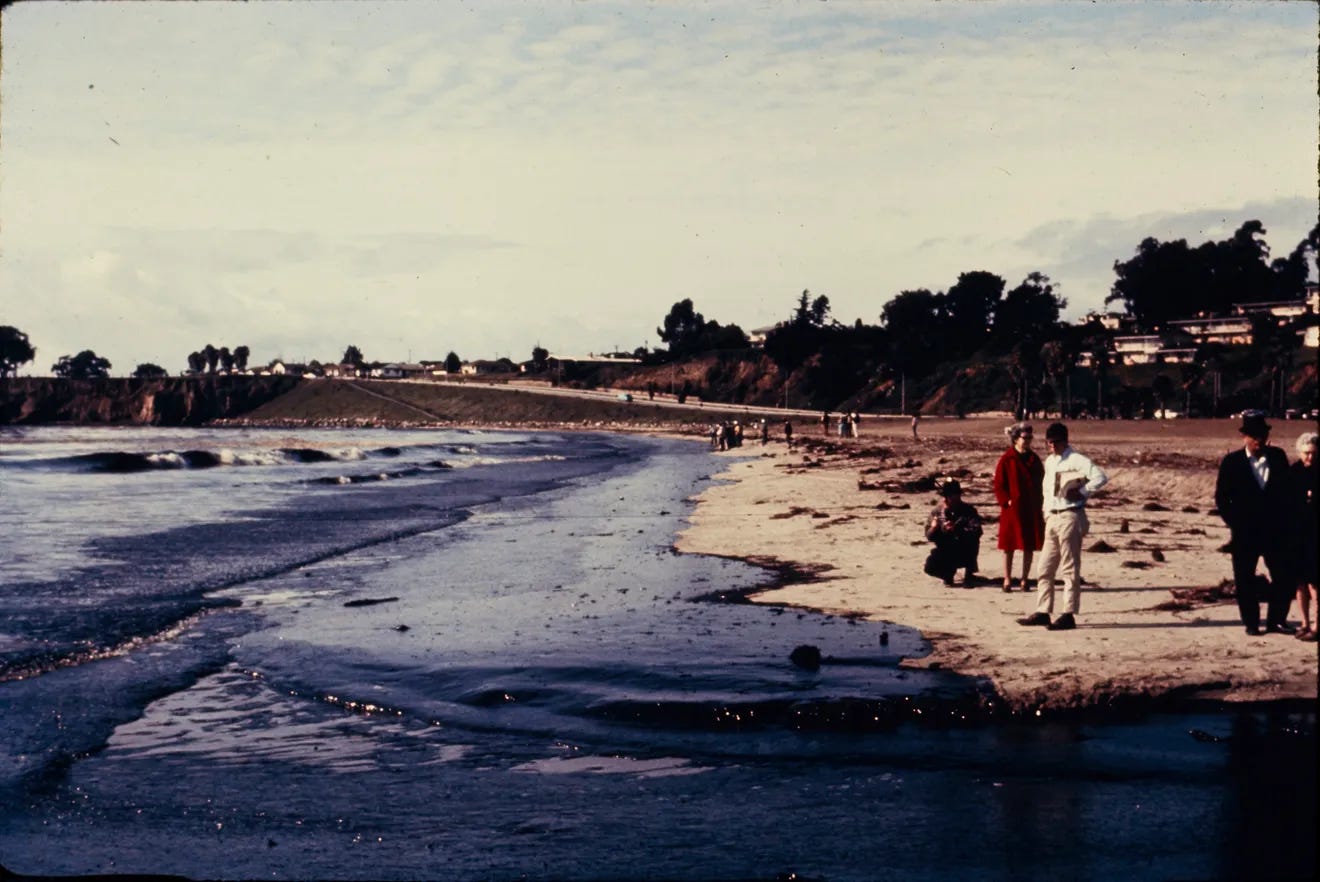
Although oil has spilled into the environment for as long as humans have sought to harness it, the Santa Barbara blowout inaugurated what today we might call the charismatic oil spill disaster: massive in scope and scale, befouling otherwise pristine sites populated by large animals with popular appeal, and providing striking, often horrifying, visuals. It’s precisely the kind of event that gets conjured when we talk about a Line 5 spill in the Straits of Mackinac.
The problem with the focus on a charismatic spill, however, is that it can overshadow disasters that are less visible, that unfold more slowly, and aren’t confined to a single compelling site. Biodiversity loss, species extinction, and climate change — these calamities are harder to crystallize in a single image or a simple, galvanizing narrative. However, they pose threats that are at least as dangerous, if not more so, as an oil spill from a ruptured pipeline. No tunnel can solve that problem.
In fact, Enbridge’s Line 5 tunnel will only intensify those dangers by locking in oil transport and combustion for decades to come. And that’s very bad news, according to the Intergovernmental Panel on Climate Change. Three years ago, in their Sixth Assessment Report, the group of scientists made it clear that the continued operation of existing fossil-fuel infrastructure alone would not prevent global temperatures from reaching the dangerous 1.5°C threshold. The conclusion to draw from the report was clear: we can’t afford any new coal plants, gas wells, or oil pipelines.
And make no mistake about it: what’s bad for the climate is bad for the Great Lakes. More extreme weather events will lead to greater nutrient runoff; combined with warmer temperatures, this creates ideal conditions for harmful algal blooms. Reduced ice cover will mean reduced protection for delicate fish eggs and will leave shorelines more prone to erosion. Fluctuating lake levels will mean damage to sensitive manoomin (wild rice) beds. Warmer water temperatures will mean compromised food webs and better conditions for invasive species, placing already vulnerable fish populations at even greater risk. And the implications of all of this for fisheries, for tourism and recreation, for Indigenous lifeways, and more will be devastating.
So don’t fall for the lie, peddled by Enbridge and their thoughtless supporters, that the tunnel will somehow protect the Great Lakes. It won’t. If anything, the tunnel poses an even greater risk to the lakes than a pipeline breach. The disaster it will help create won’t be quite as dramatically visible as an oil spill. It won’t look like oil-soaked birds and blackened shorelines. Instead, it will take the form of a slow, prolonged, mostly invisible, but almost certainly irreversible, ecosystem collapse. And once the whitefish are gone from waters that can’t sustain them, they won’t be coming back.
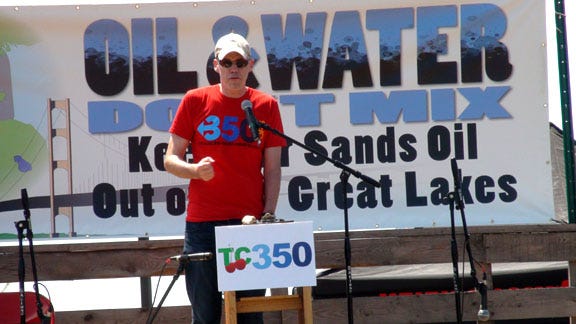
More than a decade ago, at the Oil and Water Don’t Mix rally at Bridge View Park in St. Ignace that launched the movement to shut down Line 5, the visionary activist Bill McKibben warned not just of oil spills, but of what he called “carbon spills,” the steady, ongoing release of greenhouse gas emissions into the atmosphere. The greatest danger to the Great Lakes, McKibben predicted, may not be oil that leaks into the water, but oil that gets delivered safely to the refineries, day after day, year after year.
If you’re not serious about climate change, you’re not serious about caring for the Great Lakes. Pretend measures, like Enbridge’s Great Lakes tunnel or the Bad River re-route, aren’t solutions to any real problem; they’re just ways to keep the oil flowing. And that makes them, ultimately, no different than the outright climate change denialism that is now, as of last week, official US government policy. For that reason, we can’t let regulators, policymakers, and political leaders delude themselves and gaslight us into believing that supporting or permitting the tunnel is what’s best for the Great Lakes. It’s a dirty trick, a Trojan horse, a sleight of hand. It’s a (climate) disaster masquerading as an environmental safeguard.
The final choice to stop a dangerous new oil tunnel rests with Michigan’s EGLE, and Gov. Whitmer can deny the last permit Enbridge needs. They need to hear from you. Send an email now - it’s easy to act here:
.... and our car culture no matter gas or electric powered and our fixation on economic growth as the measure of a healthy economy.
If tomorrow's children could speak now, what would they say?