


You’ve probably heard it. Every time a new regulatory or legal decision regarding the Line 5 tunnel is reached, supporters of the fantastical project, feigning exasperation, claim that if it weren’t for the actions of opponents, the tunnel would already be operational. Just last month, for example, after the EGLE permit decision, Republican State Senator John Damoose applauded the approval, saying the tunnel “should be completed and operating by now.” People have been saying this for a long time. In a letter to the US Army Corps of Engineers (USACE) in early 2025, the Mackinac Center for Public Policy claimed: “had the project been permitted to proceed when initially proposed, the Line 5 Tunnel could already have been operational.” In a similar letter two years before that in 2023, Michigan Senator Ed McBroom and the other members of the Republican caucus bemoaned “the unreasonable delay in the permitting process” and claimed that “we should be having a ribbon cutting by now.”
The implication is almost always that tunnel opponents are the cause of the delays and, hence, in a scandalous turn of irony, are prolonging the very risks—namely, the continuing operation of the twin pipelines—they claim to be worried about.
Let’s put this nonsense to rest.
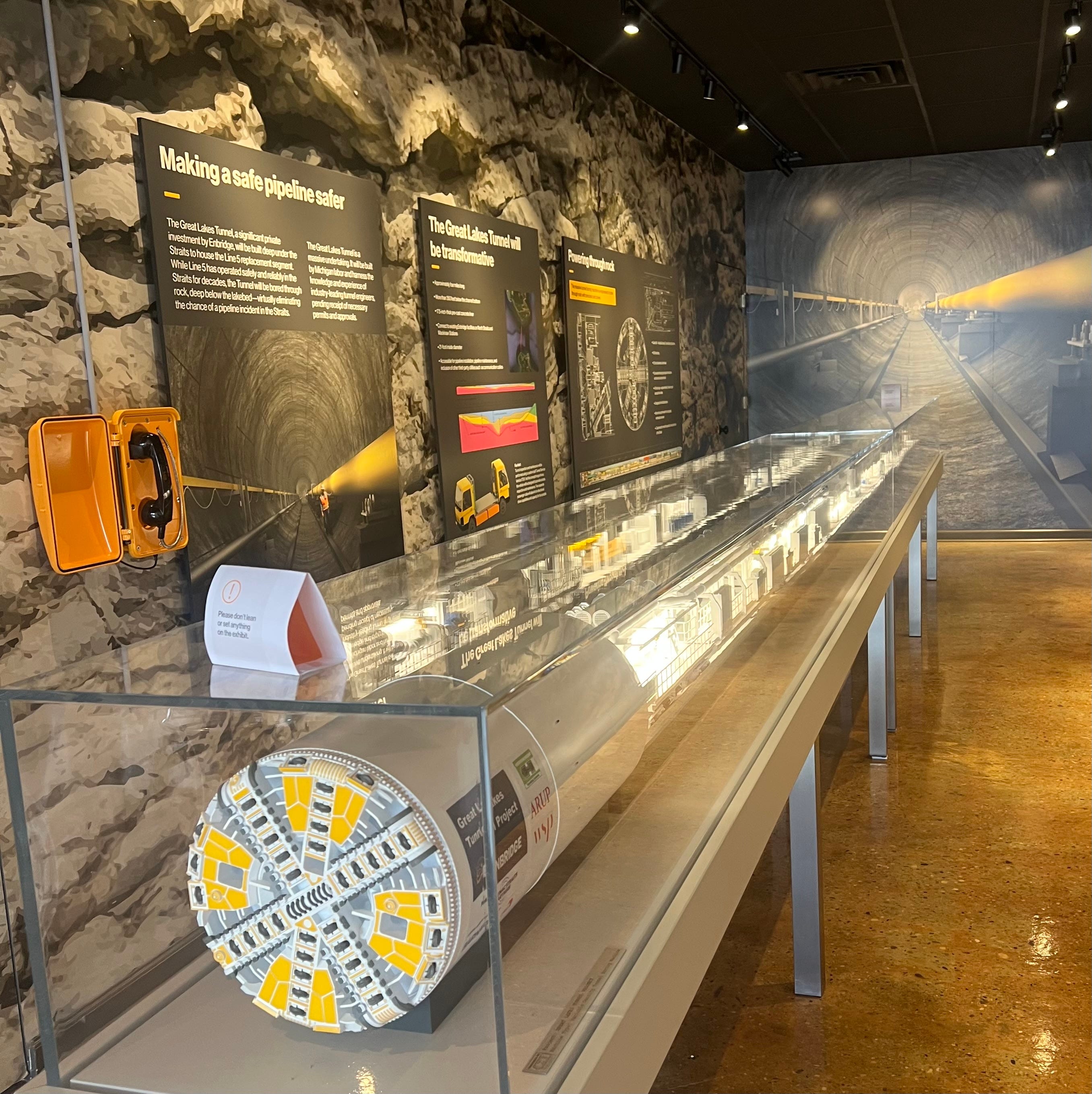
Is it true that absent delays caused by opponents, the tunnel would be built by now? The answer depends in part upon how long tunnel construction will take. And the truth is, nobody really knows, including Enbridge. When the Snyder administration passed the tunnel legislation back in 2018, Enbridge said the project would take 7-10 years to complete. Six months later, they decided they could build it even faster. In 2019, Peter Holran, director of U.S. government affairs for Enbridge, told the press that Enbridge could complete the project in just 4-5 years. “Assuming we work through a normal permitting timeline,” Holran insisted, “we should be under construction by 2021.” But Holran’s projections were ludicrous.1 In fact, Enbridge didn’t even apply for necessary permits from the Michigan Public Service Commission and the United States Army Corps of Engineers for a full year after Holran’s comments, in 2020.
A “normal” review by the MPSC for a project of this magnitude and sensitivity was never going to take less than a year. In fact, one year would have been extraordinarily quick. The review—and this is absent legal challenges and other forms of delay— ultimately took three years. Had that been the final word in the matter and had Enbridge hastily begun construction, which would take five years (if we’re being extremely generous), the tunnel still wouldn’t be done for another two years. That’s 2028.
By now we could have transformed our economy from one that relentlessly and self-destructively pursues growth to one that is sustainable for generations and aims to meet everyone’s basic needs.
But it wasn’t the final word. Enbridge still needed USACE approval. That review took five years. But that’s not abnormal. Following more than a year of initial review, hearings, and public comments—all “normal” procedures—the USACE determined that the project would require an Environmental Impact Statement, also completely normal for a project of this scope (can anyone imagine approving a project like this without a robust environmental review?). According to a study by the federal Council on Environmental Quality (CEQ), the EIS process takes, on average, 3.5 years. And that’s almost exactly how long it took in this case. All told, under a totally “normal permitting timeline,” it took the USACE five years to reach its decision, just last week. So could the tunnel be built by now? No. Even if Enbridge began construction tomorrow, the tunnel couldn’t be finished until 2031 at the earliest.
So let’s just be clear: there is no scenario whatsoever under which the tunnel could have been completed by now. In fact, up to this point, tunnel construction has not been delayed at all. The love-the-tunnel crowd might want to give that talking point a rest.
But this still leaves the matter of all the litigation. Are the protracted legal proceedings solely the result of actions by tunnel opponents? Not by a long shot. It was Enbridge that sued Governor Whitmer in federal court. It was Enbridge that failed to file a timely motion— a full year-and-a-half late, as a matter of fact—to remove Attorney General Nessel’s case to federal court. It was Enbridge that appealed the Sixth Circuit Court of Appeals ruling, dragging the case all the way to the US Supreme Court. I could go on. The point here is that Enbridge, despite their public relations confabulations, isn’t looking to speed this matter up so they can complete the tunnel as quickly as possible. They are perfectly happy with these delays.
So if we’re going to indulge in “by now” scenarios, maybe we should consider some others:
By now—almost six full years after Governor Whitmer revoked Enbridge’s easement—the State could have devised a careful plan to ensure that after a shutdown, residents of the Upper Peninsula who currently rely on propane would have a reliable and affordable source of energy to heat their homes.
By now—almost six full years after Governor Whitmer revoked Enbridge’s easement—Enbridge could have set in motion an orderly decommissioning plan, one that respects State authority, removes all risk from the Great Lakes, and also upholds its obligations to shareholders. After all, they pay a lot of people a lot of money to figure out just such things.
Also by now—almost six full years after Governor Whitmer revoked Enbridge’s easement—Enbridge refineries in Ontario and elsewhere that rely on Line 5 feedstock could have plans in place to leverage alternative supply chains so that they can continue to meet their needs for the time being.
None of these things are insurmountable hurdles. If anything, I might submit that they’re quite a bit easier to accomplish than the massive, unprecedented, years-long undertaking of constructing a first-of-its-kind four-mile-long tunnel through the Straits of Mackinac.
And then there are far more significant by nows to consider. By now—more than forty years since the industry’s own scientists confirmed that the ongoing combustion of fossil fuels posed an urgent threat to all life on the planet—we already could have decarbonized. By now we could have subsidized and incentivized development of renewable energy technology in the same way we have coal, oil, and gas for decades. By now, we could have invested in and built the infrastructure needed to support wind and solar. By now we could have retrofitted countless homes and commercial buildings to run efficiently with renewables. By now we could have transformed our economy from one that relentlessly and self-destructively pursues growth to one that is sustainable for generations and aims to meet everyone’s basic needs.
Why has that utterly achievable transformation been delayed? Certainly not because of environmental activists. It has been delayed because of decades of deliberate disinformation campaigns by the oil industry and its trade association, the American Petroleum Institute (of which Enbridge has long been a member in good standing). Without those decades of obstruction, we could have already been living without Line 5 oil by now.2
And perhaps even more important than that, Indigenous justice has been delayed for at least two hundred and fifty years. By now the settler state could have abandoned its centuries-old policies of Indigenous land dispossession and resource exploitation. By now, we could have learned to respect tribal sovereignty and Native lifeways. By now, we could have ceased violating treaties.
Climate justice and a historical reckoning are long overdue. Are we going to spend the next five or ten years focused on Enbridge’s short-term corporate profits, or should we spend them focused on healthy Great Lakes and a clean, habitable planet for future generations?
You can help this transition to a pipeline-free Straits of Mackinac. Tell Gov. Whitmer we expect her to finish the job, withdraw support for the tunnel, and get on to the work of shutting down Line 5.
In 2021, even Enbridge conceded that the tunnel couldn’t be completed before 2028.
Warnings from scientists to the oil industry are almost as old as Line 5 itself. A speaker at a meeting hosted by the American Petroleum Institute way back in 1959 warned industry executives of the serious dangers of a warming planet caused by fossil fuel combustion.
They couldn't even get to a solid timeline, they are seeing if people are naive enough to buy their bullshit. It is like a contest to see how much bad faith they can put out into the world and still force people to respond fo them anyway.
What about Line 5 being 'single-hulled'? That is 1-layer of steel between petroleum and water. Has that been examined in the case of Line 5?